
What Co Managed IT Services Add to Your Team
A critical application fails at 6:30 a.m., an executive cannot access email before a board meeting, and your only systems administrator is on vacation. Those are the moments when co managed IT services prove their value. They do not replace an internal IT team. They make that team more available, more capable, and better prepared for the work that cannot wait.
For organizations across Washington, DC, Northern Virginia, and Delaware, the question is rarely whether technology matters. It is whether the people responsible for it have enough time, coverage, and specialized expertise to keep the business secure and productive while also moving important initiatives forward.
What Co Managed IT Services Mean in Practice
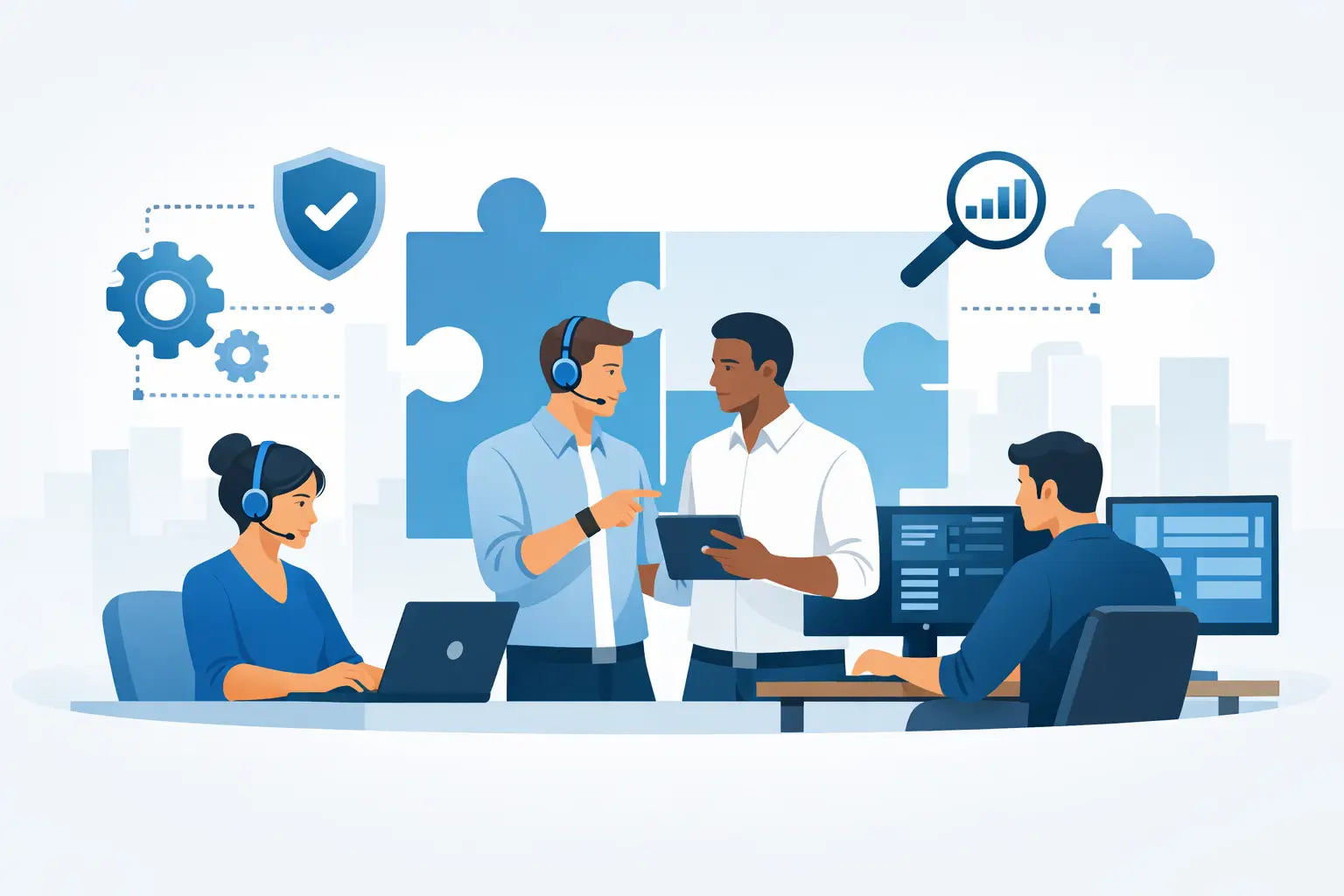
Co-managed IT is a shared-responsibility model between your internal technology staff and an external managed service provider. Your employees retain the institutional knowledge, business relationships, and control that make them valuable. The provider contributes additional engineers, service desk coverage, security resources, monitoring tools, and strategic guidance based on an agreed scope of work.
The arrangement should not feel like handing a ticket queue to an unfamiliar vendor. A capable partner learns how your organization operates, documents the environment, communicates clearly with internal staff, and works within defined escalation paths. The goal is one accountable operating model, even though more than one team is involved.
The scope can vary. One organization may need after-hours help desk coverage and endpoint management. Another may have a strong help desk but need senior infrastructure engineering, cybersecurity oversight, backup expertise, or support for a cloud migration. A third may want its internal IT manager to lead business-facing projects while an outside partner handles routine maintenance and alerts.
That flexibility is the central advantage. Co-managed support is not a fixed package that forces every IT department into the same role.
When Co Managed IT Services Make Sense
This model is often a good fit when internal IT has become reactive. If talented employees spend most of the week resetting passwords, troubleshooting printers, responding to phishing incidents, and chasing patch compliance, they have little room for planning, automation, or modernization. Adding capacity can protect the time needed for higher-value work.
It also helps when one person holds too much operational knowledge. Many small and medium-sized organizations depend heavily on a single IT manager or administrator. That person may be skilled and deeply committed, but no individual can provide 24/7 coverage, maintain every technical specialty, and remain available through vacations, illness, or turnover. Shared support reduces that key-person risk without diminishing the internal employee’s role.
Co-management is also appropriate when business requirements outpace the team’s current specialty areas. Security operations, identity management, cloud infrastructure, incident response, business continuity, and network design all require focused experience. Hiring for every discipline internally is expensive and often unrealistic. An external team can provide access to those capabilities when they are needed, while your internal staff continues to direct priorities.
A Better Division of IT Responsibilities
Successful co-management starts with clarity, not assumptions. Both teams need to know who owns end-user support, vendor coordination, patching, monitoring, change approvals, documentation, security response, and executive communication. If responsibilities are vague, tickets get delayed and minor issues turn into avoidable friction.
In many environments, the internal team remains responsible for business applications, departmental workflows, and decisions that require organizational context. The managed provider takes on proactive monitoring, routine maintenance, service desk overflow, infrastructure administration, and after-hours escalation. However, this is not the only workable structure. Some internal teams prefer to own the help desk and use a provider primarily for engineering and security. Others ask the provider to handle daily support while internal leaders focus on strategy and application ownership.
The right split depends on staff capacity, technical strengths, compliance obligations, and growth plans. It should also be documented in practical terms: service levels, escalation contacts, maintenance windows, approval requirements, and reporting expectations.
Coverage Changes the Day-to-Day Experience
An internal IT professional should not have to choose between helping a user with an urgent problem and investigating an alert that may indicate a security issue. With a co-managed model, routine requests can be addressed by a staffed service desk while internal personnel focus on projects and business priorities.
Around-the-clock monitoring matters for the same reason. Many failures happen outside business hours: a backup job stops, a server runs out of disk space, a network device loses connectivity, or an account shows suspicious sign-in activity. Early detection and remediation can prevent a Monday-morning disruption that affects the entire organization.
Coverage also improves the experience for employees. They receive a defined path for getting help, and internal IT no longer becomes a constant interruption point. That does not eliminate every issue immediately, nor should a provider promise that it can. It creates a more disciplined process for triage, communication, escalation, and resolution.
Security Cannot Be an Extra Layer Added Later
Co-managed relationships are especially valuable when security responsibilities need more attention than an internal team can consistently provide. Effective protection requires ongoing work: vulnerability and patch management, endpoint monitoring, email security, identity controls, backup verification, user education, and incident response preparation.
A provider can bring established processes and security visibility across the environment, but the internal team remains essential. They understand which systems are mission-critical, which users need elevated access, and which changes could disrupt a core business function. Security decisions are stronger when technical monitoring and business context work together.
This shared approach also supports better accountability. Regular reports should show meaningful information, such as open risks, patch status, backup performance, recurring ticket patterns, and recommended improvements. Reports should lead to decisions, not sit unread in an inbox.
Strategic Work Needs Protected Time
The real value of internal IT is not measured only by how quickly it closes tickets. It is measured by how well technology supports the organization’s goals. That includes planning for office moves, refreshing aging infrastructure, improving collaboration tools, strengthening disaster recovery, supporting acquisitions, or preparing for growth.
Co-managed support creates room for that work. Instead of treating every project as something to fit between emergencies, leadership can build a roadmap with realistic priorities, timelines, budgets, and risk considerations. The provider should contribute technical perspective, while internal leadership ensures recommendations reflect business needs.
For example, an organization considering a move to cloud infrastructure may need an assessment of application dependencies, security requirements, connectivity, backup design, and ongoing cost. The best answer may be a full cloud transition, a hybrid model, or a refreshed on-premises environment. A responsible technology partner explains the trade-offs rather than pushing a predetermined product.
How to Evaluate a Co-Managed Partner
The quality of the relationship matters as much as the service catalog. Ask prospective providers how they will integrate with your existing team, document the environment, share ticket visibility, handle after-hours events, and communicate during an incident. Their answers should be specific enough to show that they have an operating process, not simply broad capabilities.
Also examine the technical depth behind the offering. A partner may be suitable for basic support but lack the resources for cybersecurity, complex networking, data center services, disaster recovery, or major infrastructure projects. If your business relies on technology for daily operations, look for a provider that can support both immediate issues and long-term requirements.
CMA Technologies works with organizations that need this kind of practical extension of their internal capabilities, combining responsive support with proactive operations, security, and strategic planning. The purpose is not to take control away from internal IT. It is to give the business a stronger, more dependable technology foundation.
Build the Relationship Before the Next Emergency
A co-managed agreement works best when it begins with a clear assessment of the current environment. That includes network documentation, user support needs, systems ownership, security gaps, backup and recovery objectives, vendor relationships, and business priorities. Starting with this picture makes it possible to set a scope that solves real problems instead of creating duplicate effort.
The most useful next step is a candid conversation with your internal IT team about where they need support most. The answer may be coverage, specialized expertise, security oversight, or simply the capacity to spend more time on the work that will move the organization forward.