
Why Businesses Need SIEM for Faster Threat Response
A successful cyberattack rarely begins with a dramatic system outage. It often starts with a login from an unfamiliar location, an employee account requesting unusual access, or a server making an unexpected connection. Each event may look harmless on its own. The risk becomes clear only when someone can see the pattern quickly enough to act.
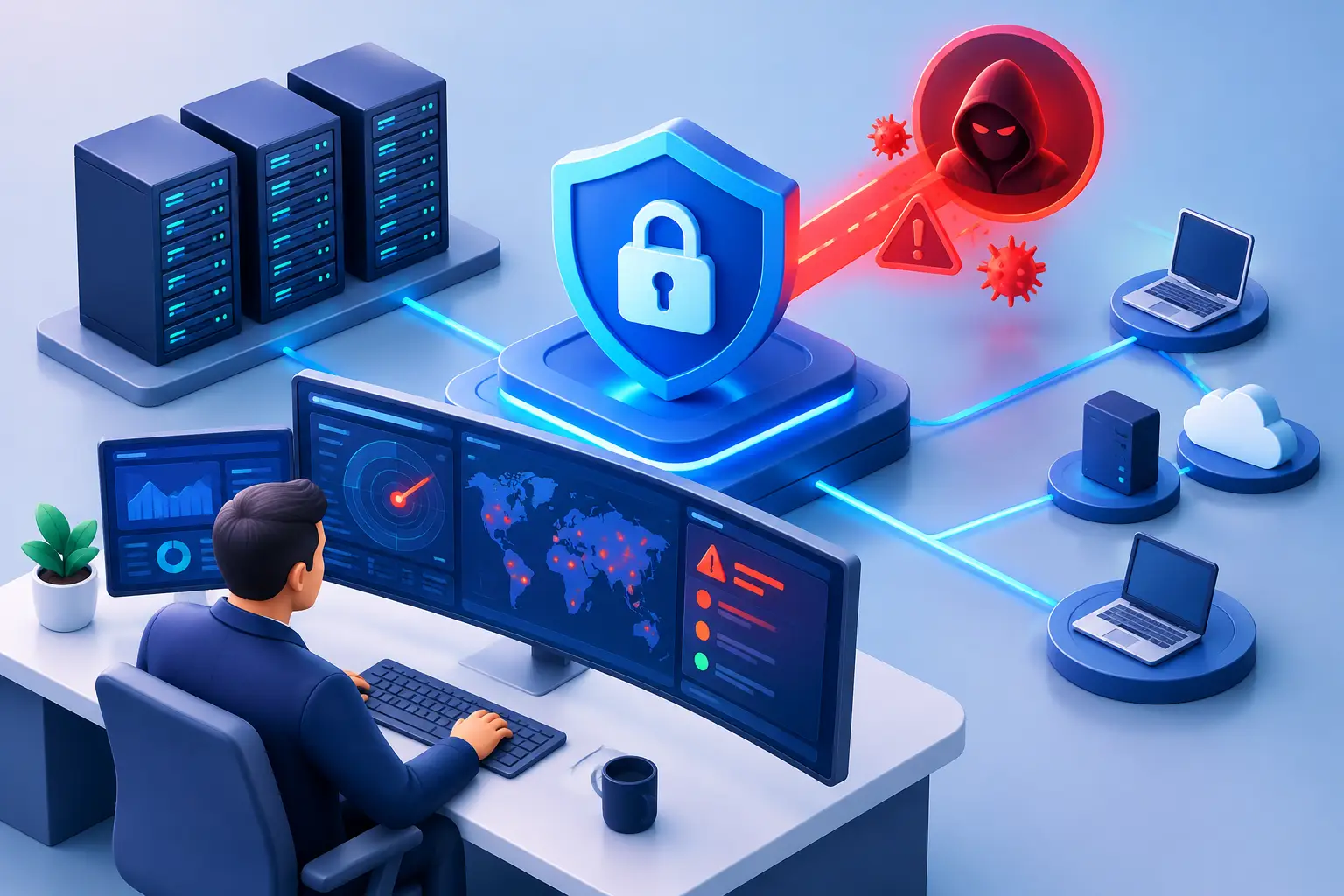
That is why businesses need SIEM, or Security Information and Event Management. A SIEM platform collects and analyzes security data across the organization, helping IT and security teams identify suspicious activity, investigate incidents, and respond before a small warning becomes an operational disruption.
For organizations that rely on email, cloud applications, line-of-business systems, remote access, and connected devices, security visibility is no longer optional. The question is not whether logs exist. Most systems already create them. The question is whether anyone is turning that data into useful, timely decisions.
What a SIEM Does for a Business
A SIEM brings security events from multiple systems into a central place. It can collect logs from firewalls, servers, endpoints, Microsoft 365, cloud platforms, network devices, identity systems, and business applications. It then normalizes that information so teams can search, correlate, and prioritize events without manually checking each platform.
More importantly, a SIEM looks for relationships between events. A failed login might not require attention. Hundreds of failed logins followed by a successful sign-in, a change in mailbox rules, and an unusual file download should. Correlation rules and threat intelligence help surface that sequence as a potential account compromise.
This gives business leaders a clearer security picture. Instead of relying on isolated alerts and assumptions, they can ask practical questions: Was sensitive data accessed? Which account was involved? What systems were affected? Has the activity stopped? What controls should be improved?
A well-configured SIEM also creates an audit trail. For organizations subject to contractual, regulatory, or insurance requirements, being able to demonstrate how security events are monitored and handled can be as important as the monitoring itself.
Why Businesses Need SIEM Before an Incident
The business case for SIEM is not simply that cyber threats are increasing. It is that modern IT environments create more security signals than a small internal team can realistically review.
A typical organization may have endpoint protection, a firewall, multifactor authentication, email filtering, cloud services, and backup systems. Those tools are valuable, but each has its own alerts, console, and log format. An attacker can move between systems while evidence remains scattered across those separate tools.
SIEM helps reduce that fragmentation. It provides a central record of activity and adds context to alerts. When security teams can see an identity event, endpoint behavior, and network connection together, they are more likely to recognize a real threat and less likely to waste time chasing an isolated false positive.
This matters because response time has direct business consequences. The longer a compromised account remains active, the more opportunities an attacker has to access data, deploy ransomware, redirect payments, or disrupt operations. Early detection can limit the scope of an incident, reduce recovery costs, and protect customer confidence.
For leaders, the value is operational as much as technical. SIEM supports a more predictable response process. Rather than assembling evidence during a crisis, the organization has centralized records, alerting logic, and documented procedures already in place.
The Security Gaps SIEM Helps Address
SIEM is especially useful when an organization needs to detect activity that crosses multiple systems. Common examples include compromised user accounts, unauthorized remote access, malware attempting to spread, unusual administrative changes, and attempts to remove or encrypt backup data.
Consider a phishing attack. An employee may enter credentials into a fraudulent page, allowing an attacker to sign in to Microsoft 365. The attacker may then create an inbox forwarding rule, search for financial conversations, and send convincing payment-related messages internally or to vendors. Individual tools may produce alerts at different stages, but SIEM can connect the behavior and raise its priority.
SIEM can also expose internal risks. Not every security issue begins outside the organization. Excessive permissions, dormant accounts, unexpected use of administrative credentials, or failed patching processes can create exposures that deserve attention. Centralized monitoring gives IT leaders evidence to improve policies and controls before those conditions are exploited.
For businesses in the Washington, DC region that work with sensitive client information, healthcare data, financial records, or government-related contracts, visibility into these events supports both risk management and accountability. The right monitoring approach should reflect the systems, data, and obligations that are most critical to the organization.
SIEM Is Not a Set-It-and-Forget-It Tool
A SIEM platform is powerful, but deploying one does not automatically create a mature security operation. The quality of the outcome depends on what data is collected, how alerts are tuned, who reviews them, and whether the team has clear authority to respond.
Poorly planned deployments can create alert fatigue. If a SIEM receives too much irrelevant data or uses generic detection rules without tuning, analysts may be overwhelmed by false positives. Important alerts can then be missed in the noise. Data retention also affects cost, particularly when large volumes of logs are stored for extended periods.
This is why the first step should be a risk-based plan, not a software purchase. Start with the systems that could cause the greatest harm if compromised: identity platforms, email, firewalls, critical servers, endpoints, cloud infrastructure, and applications containing sensitive data. Define the use cases that matter most, such as impossible travel logins, repeated authentication failures, suspicious privilege changes, or ransomware indicators.
Then establish who is responsible for review and response. A SIEM that sends alerts after business hours provides limited protection if no one is available to investigate. Many small and medium-sized organizations address this gap through managed detection and response or a managed security service that provides 24/7 monitoring and escalation.
SIEM and Managed Security Work Better Together
Businesses with internal IT teams may have the technical knowledge to operate their environment but not the staffing capacity to monitor security alerts continuously. Others may have no dedicated security personnel at all. In both cases, managed SIEM services can provide the specialized coverage needed to turn alerts into action.
A managed provider can help identify relevant log sources, tune detection rules, monitor events around the clock, investigate suspicious activity, and escalate confirmed threats according to an agreed response plan. This approach allows internal teams to focus on business technology needs while retaining visibility through reporting and regular security discussions.
The relationship should still be collaborative. External monitoring works best when the provider understands the organization’s normal operations, critical applications, approved administrators, and incident priorities. A late-night alert has very different implications depending on whether it involves a test account, a payroll administrator, or a server supporting a mission-critical application.
For co-managed IT environments, SIEM can also improve communication between internal staff and an outside security partner. Both teams work from the same evidence, reducing uncertainty during incident response and making it easier to track improvements over time.
How to Decide Whether SIEM Is Right for Your Organization
Not every business needs the same SIEM design. A small organization with a straightforward environment may need focused monitoring of identity, endpoints, email, and firewall activity rather than a complex enterprise deployment. A company with compliance obligations, multiple sites, cloud workloads, or a high-value data environment may need broader log collection, longer retention, and more advanced detection capabilities.
The right question is not, “Do we need every available security feature?” It is, “Can we identify and respond to the threats most likely to interrupt our business?” A security assessment can clarify where current visibility ends, which alerts are not being reviewed, and what response coverage is missing.
Technology you can trust should do more than generate data. It should help your organization recognize risk, make informed decisions, and keep critical operations moving when a threat appears. SIEM provides the visibility. The right people, processes, and ongoing oversight turn that visibility into protection.